The Future of Part O Compliance: Why Cooling Capability Now Matters
Philip Ord, UK CEO, Qvantum UK
The UK housing market is entering a new phase of climate adaptation. For years, residential HVAC conversations focused almost entirely on heating efficiency and decarbonisation. But as summer temperatures continue to rise, overheating is becoming one of the most important design challenges facing developers, consultants and housing providers.
The recent spell of hot weather across the UK has brought this issue into sharp focus, highlighting how overheating is becoming a real-world challenge rather than a future risk. Homes that were designed primarily to retain heat are increasingly being tested by prolonged periods of high temperatures, underlining the need for solutions that deliver comfort year-round.
“Overheating is no longer a marginal design consideration, it is now a central performance and compliance issue for residential developments. The combination of rising summer temperatures and tighter building regulations means developers can no longer treat cooling as optional.”
– Philip Ord
The latest report from the Climate Change Committee reinforces this shift, warning that overheating risk across UK homes is accelerating and that future building strategies will increasingly require active cooling solutions alongside traditional passive measures.
Part O is Changing Residential Design
Part O is part of the UK Building Regulations focused on overheating in residential buildings. Since its introduction, developers have been required to demonstrate that homes can limit unwanted solar gains and maintain acceptable indoor temperatures during summer conditions.
In practice, this has created challenges across highly insulated apartments, urban developments with large glazing areas, single-aspect dwellings and retrofit projects with ventilation limitations.
Many schemes can no longer rely on passive measures alone to achieve compliance.
In many urban residential developments, passive mitigation strategies are becoming increasingly difficult to implement successfully. Noise constraints, air quality concerns, security limitations on open windows and highly glazed façades can significantly restrict natural ventilation opportunities, particularly in single-aspect apartments. As a result, the industry is increasingly looking towards low-carbon active cooling solutions that can support TM59 modelling and reduce overheating risk without requiring major redesigns
Why Cooling Performance Matters
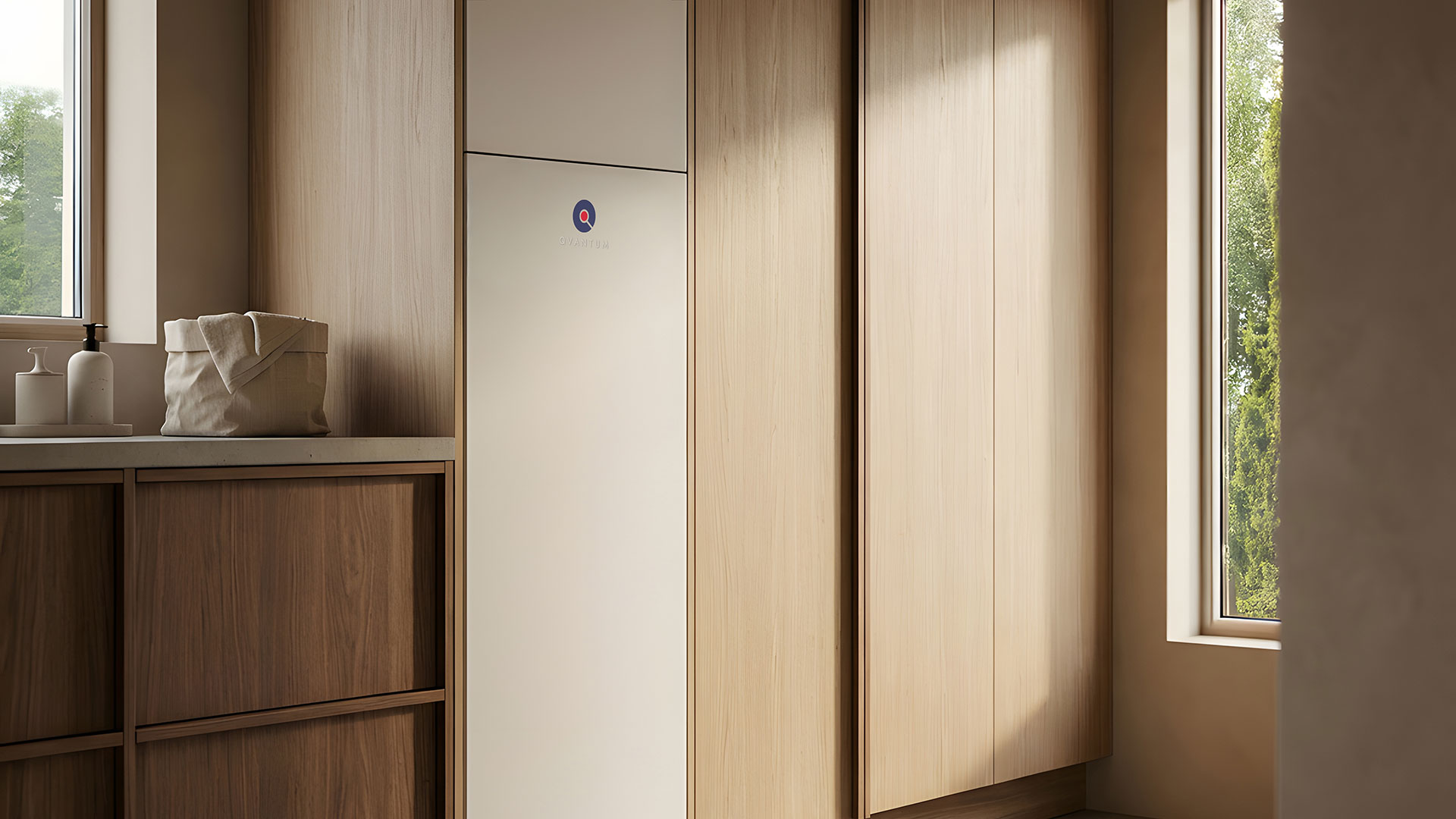
This is where the latest development of the Qvantum QE heat pump becomes particularly significant.
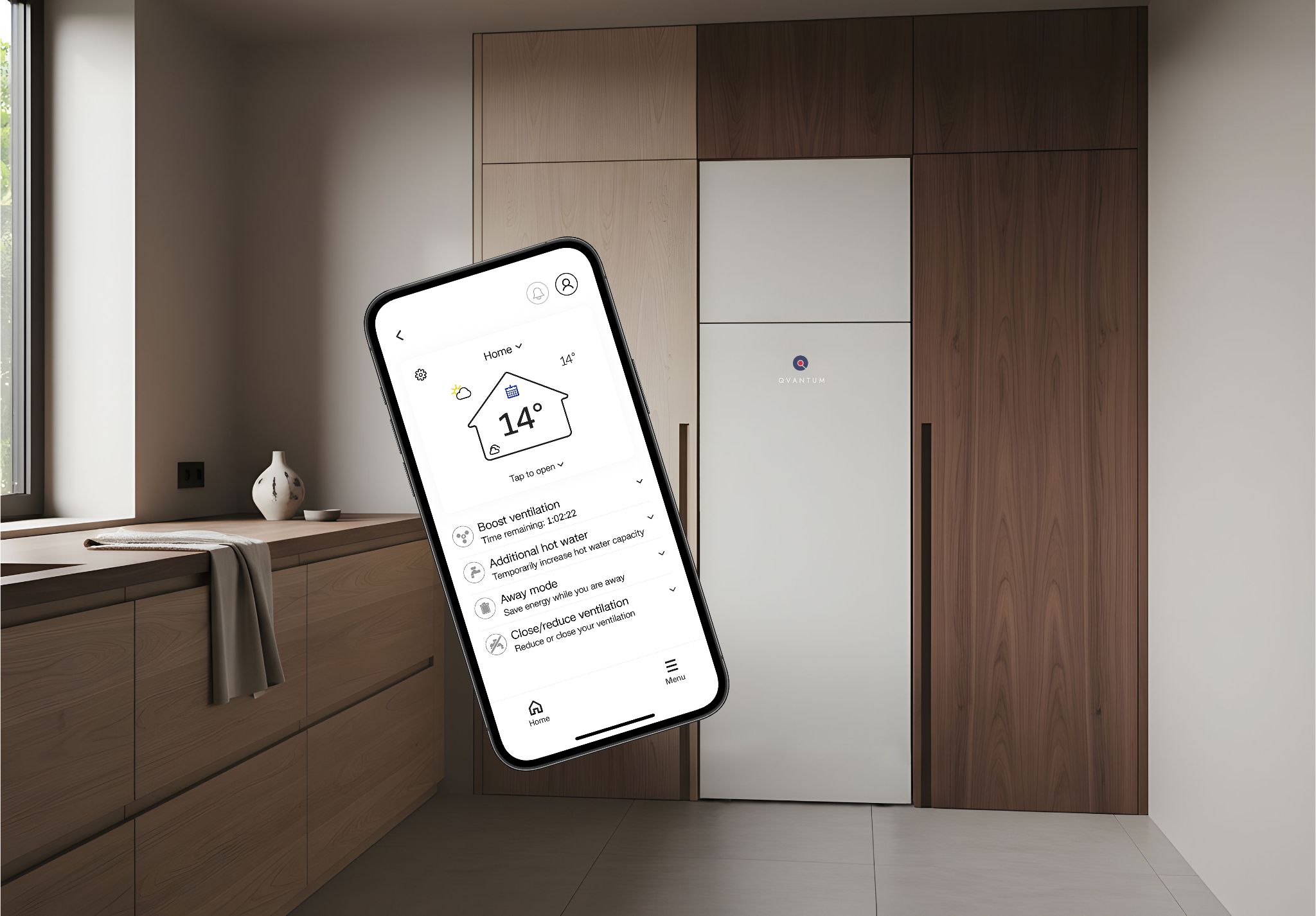
The QE can now provide cooling flow temperatures down to 14°C. This lower flow temperature substantially improves sensible cooling performance when paired with compact fan coil units, allowing projects to achieve meaningful overheating mitigation through a simple and affordable solution.
The benefits are clear: stronger cooling capability, easier Part O compliance and reduced reliance on costly façade modifications or ventilation redesign measures.
As overheating becomes a more prominent consideration for developers, the ability to integrate effective cooling into a low-carbon heating strategy is becoming increasingly valuable.
Heating and Cooling in One System
The UK market is evolving beyond the idea of the heat pump as simply a heating system.
Future-ready residential solutions must increasingly provide low-carbon heating, domestic hot water and practical summer cooling within a single integrated approach.
The Climate Change Committee’s findings make clear that climate resilience will become a central requirement of housing design over the coming decades. Developers are increasingly being asked not only how efficiently homes can be heated in winter, but how comfortably they can be occupied during hotter summers.
By extending cooling capability to 14°C, the Qvantum QE is positioned to help developers and consultants respond to that shift with a practical, scalable solution.
The QE is an exhaust air heat pump that combines ventilation, heating, cooling and hot water in a single integrated system.
Overheating is no longer a future problem; it is already shaping planning, compliance and building design decisions across the UK. The recent periods of hot weather have demonstrated that occupant comfort during summer months is becoming just as important as winter heating performance.
As regulations evolve, integrated heating and cooling solutions are likely to become a standard part of residential development strategy. It is also worth noting that both the QG and QA support full active cooling capability.
The conversation is no longer simply about energy efficiency. It is now about creating homes that remain comfortable, resilient, future-proof and compliant in a warming climate.