How Heat Pumps Support Social Housing and Awaab’s Law
Phil Turner New Build & Social Housing Manager | Qvantum UK
The UK social housing sector is facing a defining moment. With the introduction of Awaab’s Law, alongside tightening decarbonisation targets and rising energy costs, housing providers must deliver homes that are not only energy efficient, but also safe, healthy, and affordable to live in.
The first phase of Awaab’s Law came into force on 27 October 2025, requiring social landlords to investigate and resolve damp and mould hazards, as well as emergency hazards that present an imminent risk to residents’ health and safety, within prescribed timescales. The legislation will expand further on 30 November 2026, when additional hazards, including excess cold and excess heat, come within scope, reinforcing the need for properties that provide safe, comfortable, and healthy living environments year-round.
While air source heat pumps (ASHPs) are becoming an increasingly important part of the solution for decarbonising residential heating, exhaust air heat pumps (EAHPs) can offer additional benefits in homes where condensation and mould are a concern. EAHPs work in a similar way to ASHPs, but instead of extracting heat from outdoor air, they recover energy from warm air being extracted from inside the property. By combining heat recovery with continuous ventilation, EAHPs can help improve indoor air quality, reduce moisture levels and lower the risk of mould growth, making them particularly effective in multi-occupancy and retrofit housing projects.
What Is Awaab’s Law and Why It Matters
Awaab’s Law was introduced following the death of Awaab Ishak and places a legal duty on social landlords to investigate and resolve hazards such as damp and mould within defined timeframes.
This legislation fundamentally shifts the focus towards prevention, not reaction, requiring housing providers to address root causes, not just symptoms of poor housing conditions.
“Awaab’s Law represents a significant shift for the housing sector. It’s no longer enough to respond when issues arise; landlords need to be proactive in understanding the factors that contribute to damp and mould and take preventative action wherever possible.”
– Phil Turner, New Build & Social Housing Manager, Qvantum UK
The Link Between Heating, Damp and Tenant Health
Damp and mould are often driven by a combination of:
Inadequate or inconsistent heating
High indoor humidity
Poor ventilation
Fuel poverty leading to under-heating
Homes that cannot maintain stable warmth are more likely to experience condensation build-up, creating conditions where mould thrives.
This is where modern low-carbon heating solutions become essential, not just for sustainability, but for compliance and tenant wellbeing.
Why Damp and Mould Remain a Challenge in Social Housing
Damp and mould remain some of the most significant housing quality challenges facing social housing providers across the UK. While defects in building fabric and inadequate ventilation can contribute to moisture problems, heating performance is often a key factor in creating healthy indoor environments.
When homes are difficult or expensive to heat, residents may reduce heating use to manage energy costs. This can lead to colder indoor temperatures, increased condensation and conditions that allow mould to develop over time. Combined with everyday household activities such as cooking, bathing and drying clothes indoors, excess moisture can quickly become a persistent issue.
Awaab’s Law has increased the focus on addressing the root causes of damp and mould rather than relying on temporary remedial measures. As a result, housing providers are increasingly looking at heating, ventilation and overall building performance as part of a long-term strategy for healthier homes.
“We’ve seen that damp and mould are rarely caused by a single issue. Heating, ventilation, occupancy patterns and building performance all play a role. The challenge for housing providers is finding solutions that address these factors together rather than in isolation.”
Awaab’s Law Is Driving a More Preventative Approach to Housing Management
Awaab’s Law represents more than a new set of repair requirements. It reflects a wider shift towards preventative housing management, where landlords are expected to identify and address risks before they impact residents’ health and wellbeing.
Guidance accompanying the legislation makes clear that landlords should investigate the underlying causes of damp and mould rather than simply treating visible symptoms. The focus is increasingly on ensuring that homes can provide safe, healthy and comfortable living environments over the long term.
This preventative approach aligns closely with broader housing priorities, including decarbonisation, energy efficiency improvements and tackling fuel poverty. By investing in systems that support consistent indoor temperatures and improved building performance, housing providers can help reduce the likelihood of recurring housing hazards while improving resident outcomes.
Why Exhaust Air Heat Pumps Are Key to the Solution
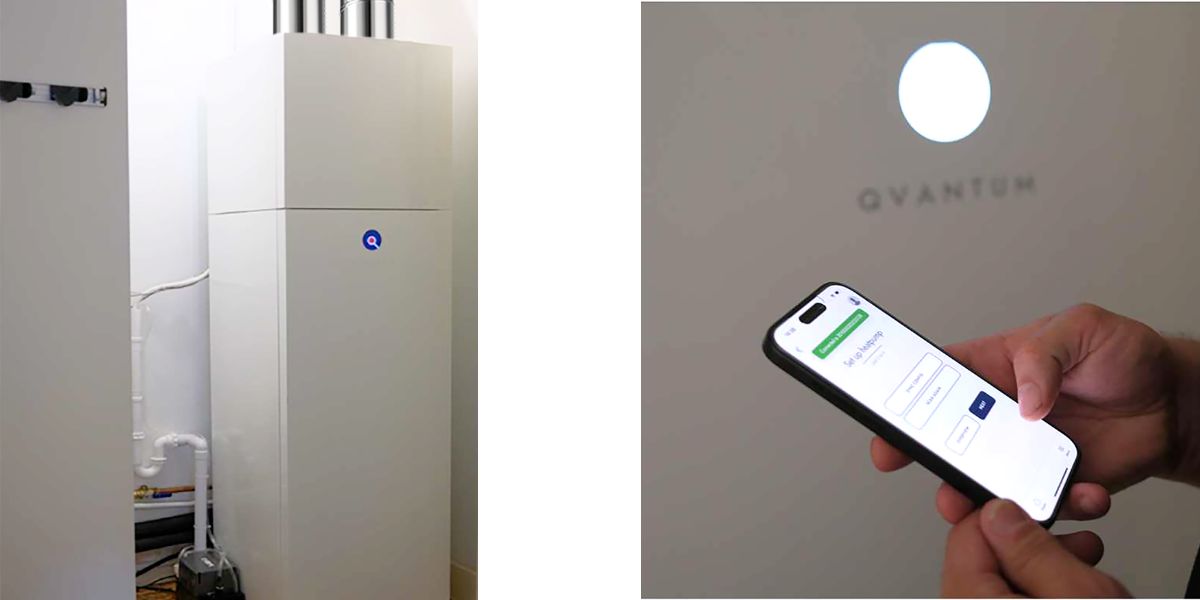
Exhaust Air Heat Pumps (EAHPs) provide efficient, low-carbon heating while also supporting healthier indoor environments. Rather than extracting heat from outdoor air, EAHPs recover energy from warm air being continuously extracted from inside the building. This enables them to combine heating, hot water production and mechanical ventilation within a single system.
When properly designed, EAHPs offer:
Consistent, low-temperature heating
Continuous ventilation to help manage moisture and indoor air quality
Lower running costs and carbon emissions
Unlike traditional heating systems, EAHPs actively remove moisture-laden air from kitchens, bathrooms and other living spaces while recovering valuable heat that would otherwise be lost. This helps create the stable indoor conditions needed to reduce the risk of damp and mould.
The importance of effective ventilation is highlighted in UK Government guidance on damp and mould, which identifies inadequate ventilation and condensation as key underlying causes of mould growth and recommends addressing ventilation issues as part of a long-term solution.
“Awaab’s Law has brought much-needed focus to the importance of tackling the root causes of damp and mould. Heating and ventilation should not be considered separately. Exhaust Air Heat Pumps provide a practical solution by delivering efficient heating while continuously removing moisture-laden air from the home. For housing providers looking to improve resident wellbeing, reduce carbon emissions and meet evolving regulatory requirements, EAHPs can play a crucial role.”
The Challenges of Decarbonising Social Housing
Housing associations and local authorities face a complex challenge: reducing carbon emissions while maintaining affordability, comfort and compliance across diverse housing portfolios. Many providers are managing ageing housing stock originally designed around fossil fuel heating systems. Upgrading these properties requires solutions that can support energy efficiency targets while minimising disruption for residents and maintaining reliable heating performance.
This challenge becomes even greater in apartment blocks and multi-dwelling buildings, where heating strategies must account for varying property layouts, occupancy patterns and infrastructure constraints.
Modern heat pump systems are increasingly being adopted as part of wider retrofit and new-build programmes because they can help lower operational carbon emissions while supporting more stable indoor temperatures and improved energy efficiency. When combined with appropriate ventilation measures and building fabric improvements, heat pump systems can contribute to healthier, more resilient homes that are better prepared for future regulatory requirements.
“Housing providers are balancing multiple priorities at once—decarbonisation, affordability, resident wellbeing and regulatory compliance. The technologies that will have the greatest impact are those capable of supporting all of these objectives simultaneously.”
Qvantum UK: Heat Pump Solutions for Social Housing
At Qvantum UK, we develop heat pump systems specifically for social housing providers, local authorities, retrofit programmes and developers delivering low-carbon homes. Our solutions are designed for apartment blocks, multi-dwelling buildings, retrofit projects and new-build developments. By combining efficient heating with ventilation-led approaches, Qvantum systems help maintain stable indoor temperatures, support healthier living environments and improve energy performance.
We work closely with housing associations and developers to deliver scalable solutions that support Future Homes Standard requirements, minimise disruption to residents and provide long-term asset performance.
“At Qvantum, we’ve developed our EAHP solutions specifically with multi-occupancy housing in mind. By combining heating, hot water and ventilation, we’re helping housing providers improve energy performance while supporting healthier indoor environments for residents.”
Supporting Housing Associations and Developers
Qvantum UK works in partnership with housing providers to deliver end-to-end project support.
For Housing Associations
Scalable retrofit solutions
Minimal-disruption installation approaches
Long-term asset performance support
For Developers
Future Homes Standard-ready systems
Low-carbon heating design for new builds
Flexible system configurations for different property types
Meeting Awaab’s Law Through Better System Design
While damp and mould require a holistic response, reliable heating systems play an important role in supporting healthier indoor environments.
Awaab’s Law has reinforced the need for housing providers to address the underlying conditions that can contribute to housing hazards. Consistent indoor temperatures, effective moisture management and improved building performance all form part of a preventative approach to housing quality.
Qvantum EAHP solutions can help landlords:
Provide efficient heating and continuous ventilation
Maintain more stable indoor temperatures
Support moisture management and resident wellbeing
Contribute to wider decarbonisation and energy-efficiency targets
As part of a wider whole-building strategy that includes ventilation and fabric improvements, modern heat pump systems can help housing providers create healthier, more resilient homes.
The scope of housing quality regulation continues to evolve. Alongside damp and mould, housing providers are facing increasing expectations around resident safety, thermal comfort, energy efficiency and overall building performance. Future phases of housing regulation are expected to place greater emphasis on identifying and addressing a wider range of hazards, reinforcing the importance of proactive asset management and long-term investment strategies.
For social housing providers, this means considering how heating, ventilation, insulation and building design work together to create homes that are safe, healthy and affordable to live in. By investing in efficient, low-carbon heating technologies today, landlords can support both immediate housing quality objectives and longer-term sustainability goals.
Future-Proofing Social Housing Stock
Together, Awaab’s Law, the Future Homes Standard and the UK’s net-zero ambitions are redefining expectations for social housing. Providers must deliver homes that are healthy, energy-efficient, affordable and future-ready.
Qvantum’s heat pump solutions are designed to help meet these challenges, supporting the transition to sustainable, high-performing homes at scale.
“The conversation around housing quality has changed. Residents rightly expect homes that are warm, healthy and affordable to live in. As the sector responds to Awaab’s Law and wider sustainability targets, integrated solutions such as EAHPs will become an increasingly important part of delivering those outcomes.”
Awaab’s Law has highlighted the need to address the underlying causes of damp and mould rather than relying on short-term remedial measures. By combining efficient heating with continuous ventilation, Qvantum’s EAHP solutions can help housing providers create healthier homes, improve resident wellbeing, reduce carbon emissions and support compliance with evolving housing standards. As part of a whole-building approach, they offer a practical pathway towards safer, more sustainable social housing.