Heat networks: the right solution in the right place
Michael Moggeridge, Managing Director, Qvantum UK
If you build homes in London, heat networks are about to matter a lot more. The UK government aims to more than double the share of heat in England supplied by heat networks by 2035, and from December 2026, heat network zoning rules will begin requiring certain buildings to connect.
For developers, investors, and housing providers, now is the time to understand what’s coming — and, crucially, what type of heat network works best in different settings.
The London Assembly Environment Committee’s recent report, Zoning: The Heat Networks Puzzle, offers a refreshingly honest assessment of how heat networks are performing today. The takeaway is clear: the concept is strong, but many existing systems are underperforming and that reality shapes everything that follows.
Heat networks aren’t one-size-fits-all
First, a quick myth-buster: a “heat network” is not a single technology.
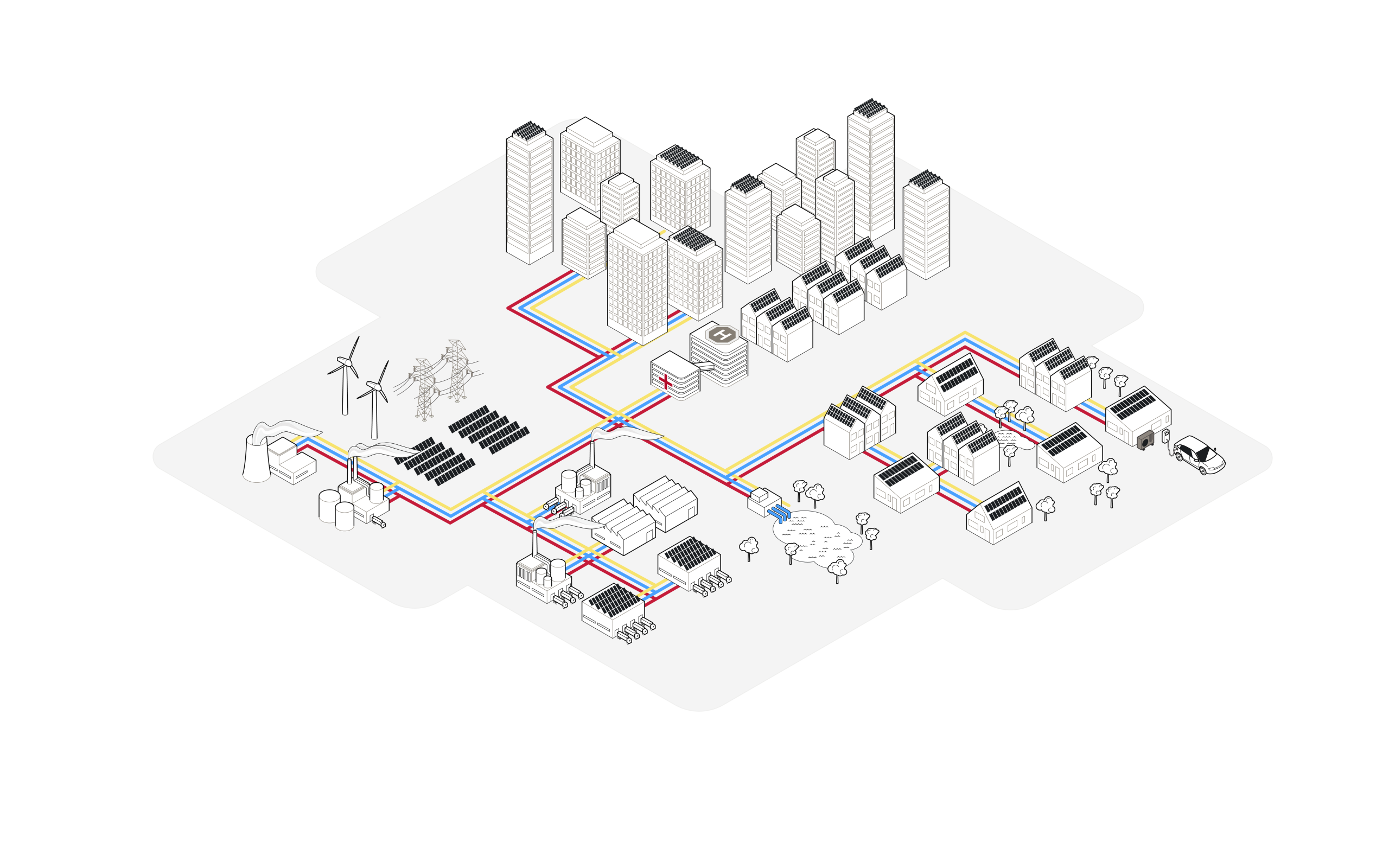
The most familiar model is conventional district heating. This uses a central energy centre to heat water to around 70–90°C and distribute it via insulated pipes to connected buildings. In areas with high density and strong, consistent heat demand, particularly where there’s access to sources like energy-from-waste plants, this approach is proven and effective. It will continue to play a key role in London’s densest developments.
Alongside this, there is the fifth-generation heat network, also known as an ambient loop system. These operate differently: water circulates at near-ground temperatures (10–20°C), and individual heat pumps in each dwelling provide heating and cooling locally.
These systems are well suited to:
Lower-density developments
Mixed use schemes requiring cooling
Retrofit projects
Locations with only low-grade heat sources available
The important point is not which is “better”. These systems are complementary solutions – different tools designed for different environments.
What the GLA report highlights
The Committee’s findings expose several critical issues with existing UK heat networks:
Energy bills doubling or tripling since 2021, with heat network users excluded from the energy price cap
Some communal heating systems operating at just 35% efficiency, compared to ~84% for a modern gas boiler
Extended outages, sometimes lasting weeks during winter
Leaseholders facing £50,000–£70,000 upgrade costs in ageing systems
Limited transparency and no ability to switch suppliers
Its top recommendation is clear: introduce price protections for heat network customers and pause zoning expansion until that protection is in place.
Regulation is beginning to catch up. Ofgem became the heat networks regulator in January 2026, with further technical standards and service requirements expected in 2027. This is a necessary step but regulation alone cannot fix poor system design.
Ultimately, better-performing heat networks start with better design choices — including selecting the right type of network.
What heat network zoning means for developers
In practical terms, heat network zones will require certain new and existing buildings to connect to a network.
However:
Individual homes with independent systems are unlikely to be forced to connect
Exemptions exist for buildings already using low-carbon heating
Even within a zone, occupants may still choose whether to purchase heat
In London, this builds on the London Plan, which already strongly encourages heat network adoption. In fact, 91% of new homes approved by the Mayor in 2023 are expected to connect to heat networks.
The key takeaway: your heating strategy must now be decided early in the design process — not retrofitted later.
Where ambient loop heat networks add value
In the right context, ambient loop (fifth generation) networks can directly address several of the issues identified in the GLA report:
Higher efficiency: Minimal heat loss due to low operating temperatures
Reduced overheating risk: No constant high-temperature pipework in buildings
Fairer energy bills:
Residents use their own electricity supply
Covered by energy price caps
Free to switch providers or use off-peak tariffs and on-site renewables
Lower grid impact: Heat pumps are far more efficient than direct electric heating, especially when paired with thermal storage
Expanded use of waste heat:
High-temperature sources suit traditional networks
Low-grade sources (data centres, rivers, sewers) are ideal for ambient loops
Using both systems together allows cities like London to maximise available heat sources and optimise energy use.
“The goal, for all of us, is simple – the right network in the right place”.
– Michael Moggeridge, Managing Director, Qvantum UK
What ambient loop systems don’t solve
No system is a silver bullet and ambient loop networks are no exception.
Key considerations include:
They rely on electricity, which in the UK is still significantly more expensive than gas
They require sufficient local electrical capacity
A balancing heat source is needed (e.g. boreholes or nearby water bodies)
They are still relatively new in the UK market, though adoption is accelerating
There’s also an important regulatory detail: because residents pay for electricity rather than heat, policy needs to ensure these users retain price protections and flexibility.
This is an active area of industry engagement, including work through:
At Qvantum, our QG and QG-C heat pumps are specifically designed for ambient loop networks, with individual units in each dwelling upgrading low-temperature heat locally. They are particularly well suited to:
Lower-density developments
Mixed-use projects
Retrofit applications
Our QE heat pump is designed for apartments, combining:
Heating
Hot water
Ventilation
Cooling
All within a single compact system. Over-the-air updates ensure continuous performance improvements, including a recent upgrade enabling cooling down to 14°C to support overheating compliance.
This approach reduces energy demand from the outset, rather than correcting inefficiencies later.
We are already delivering some of the largest ambient loop heat network projects in London and across the UK, spanning both new-build and retrofit schemes.