
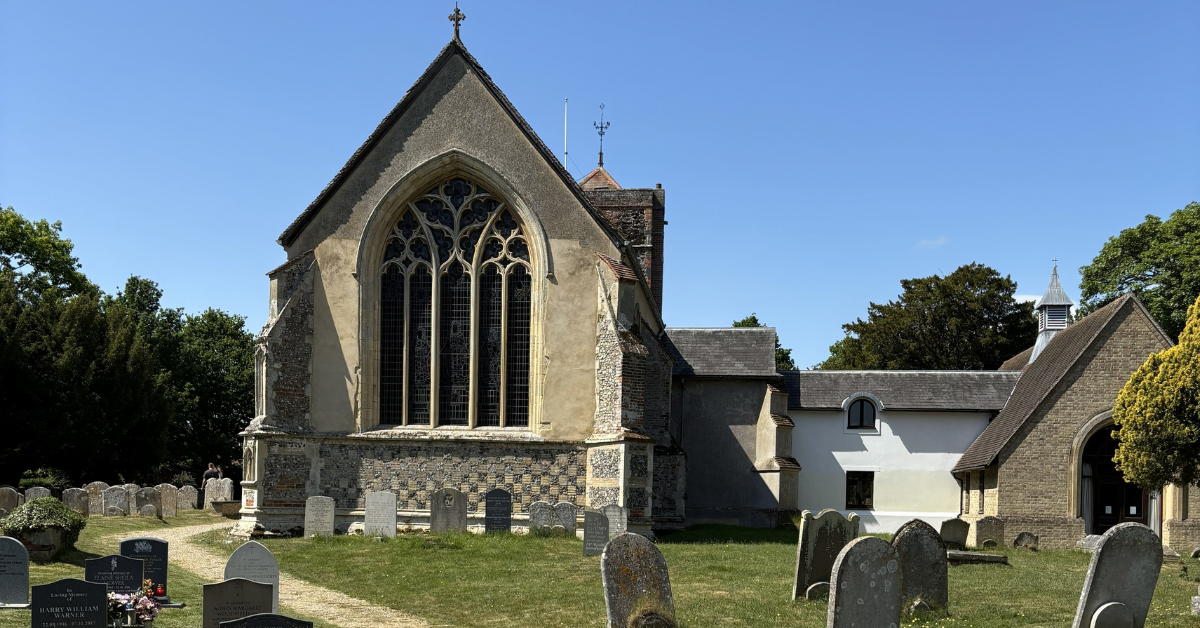
Qvantum Energy Technology has supplied a highly efficient and sustainable heating system upgrade for St Mary the Virgin Church in Lawford, Essex. This unique project required the replacement of an existing biomass boiler system with a pellet burner, which had become increasingly difficult to maintain.
For the heating upgrade Bells Power Group delivered a highly innovative solution by designing and prefabricating a complete plant skid for the new heat pump system, enabling full off-site assembly and testing before installation. The skid incorporated the cascade arrangement serving four Qvantum QA22 monobloc air-to-water heat pump units together with associated pipework and controls integration with the church’s existing system.
By carrying out factory prefabrication and full off-site functional testing prior to delivery, Bells Power Group part of the MC Dean Group minimised installation time and disruption to the historic 13th-century church while ensuring system performance before commissioning on site. This approach represented a first-of-its-kind delivery model for a Church of England project, demonstrating how modern off-site engineering and low-carbon heat pump technology can be successfully applied within sensitive heritage buildings.
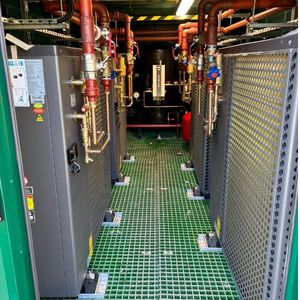
The Qvantum QA22 monobloc air-to-water heat pumps operate on ultra-low-GWP R290 refrigerant and serve the church hall via radiators, with underfloor heating and fan convectors providing heating to the main Church. The system has been designed and developed in alignment with the Client’s requirements to deliver a “plug and play” engineered solution, enabling simplified installation, seamless integration with existing infrastructure, and efficient commissioning while maintaining high operational performance and reliability.
The units are configured in a cascade arrangement, with insulated pipework routed underground to the Church and connected into the existing heating circuits via the buffer vessel. This configuration supports improved system efficiency and reduced heat losses, contributing to the building’s overall sustainability objectives and net zero ambitions. With a combined capacity of 88 kW, the system is managed by the church’s heating network controls, ensuring coordinated operation and optimised energy use. Each unit is self-regulating, maintaining a flow temperature of 55°C to deliver consistent performance while minimising unnecessary energy consumption and supporting low-carbon operation.
Bells Power Group said, “The previous system required frequent servicing and repairs, which made it costly and complicated to maintain. With the new set-up, the church now benefits from a low-maintenance heating system that will last for many years. This has been a unique project, and we are very proud to be part of the church’s history. The Church of England’s commitment to achieving zero carbon has been an inspiring journey.”
The external units are housed in a bespoke acoustic enclosure, specified by consultant RBA Acoustics and designed by Allaway Acoustics, which accommodates an air flow rate of 120m3/min per unit. Planning conditions meant the system could not exceed 36 dB (A) in keeping with other prevailing background sound around the church. The louvre blades feature a noise-dampening internal face and an open free area between the blades of between 35-40%.
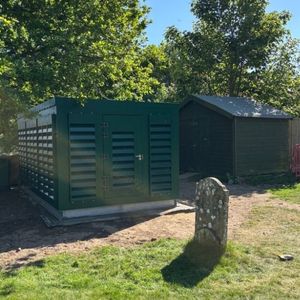
RBA said: “It is crucial that any church heating system is as unobtrusive as possible and we were delighted to help produce a solution which delivers in terms of sound levels with minimal or no impact on system performance.’’
Andy Robinson, Technical Support at Qvantum, added: “We worked closely with Bells Power Group and acoustic teams to design something that we knew was right for the customer. The end result is a quiet, sustainable and future-proof system.’’
Find out more about Qvantum’s products & solutions New Product Landing – Qvantum
