

By Dan Gentle, Consultant Account Manager, Qvantum UK
As the UK moves towards net zero, consultants and specifiers are under increasing pressure to deliver heating solutions that go beyond carbon reduction alone. Today’s residential developments must balance energy efficiency, occupant comfort, electrical infrastructure constraints and future regulatory requirements.
At the same time, the electricity grid is evolving rapidly. As renewable energy generation increases, the industry faces a new challenge: ensuring energy is consumed when it is most abundant and sustainable.
This is where thermal battery technology is becoming an increasingly important consideration for specifiers.
The Growing Need for Energy Flexibility
The widespread adoption of heat pumps is essential to decarbonising UK homes. However, if millions of heat pumps operate at peak times simultaneously, the demand placed on the electricity network will be significant.
The challenge isn’t simply generating renewable electricity, it’s storing and using that energy efficiently.
“The future of low-carbon heating isn’t just about replacing fossil fuel systems with heat pumps. It’s about designing heating systems that work with the grid rather than against it.”
For building services consultants and M&E specifiers, this means looking beyond traditional performance metrics and considering how heating systems will operate within a changing energy landscape.
Supporting the UK’s Future Energy System
As the UK transitions towards a low-carbon future, heating systems will need to do more than provide warmth. They will also need to support changing building regulations and an increasingly flexible electricity grid.
Thermal battery technology complements this transition by allowing heating systems to shift energy use away from peak demand periods. This can support wider decarbonisation goals while helping developments respond to changing electricity prices and increasing renewable energy generation. For developers and specifiers, considering energy flexibility alongside traditional performance measures can help create buildings that are better prepared for future regulatory and market changes.
What Is a Thermal Battery?
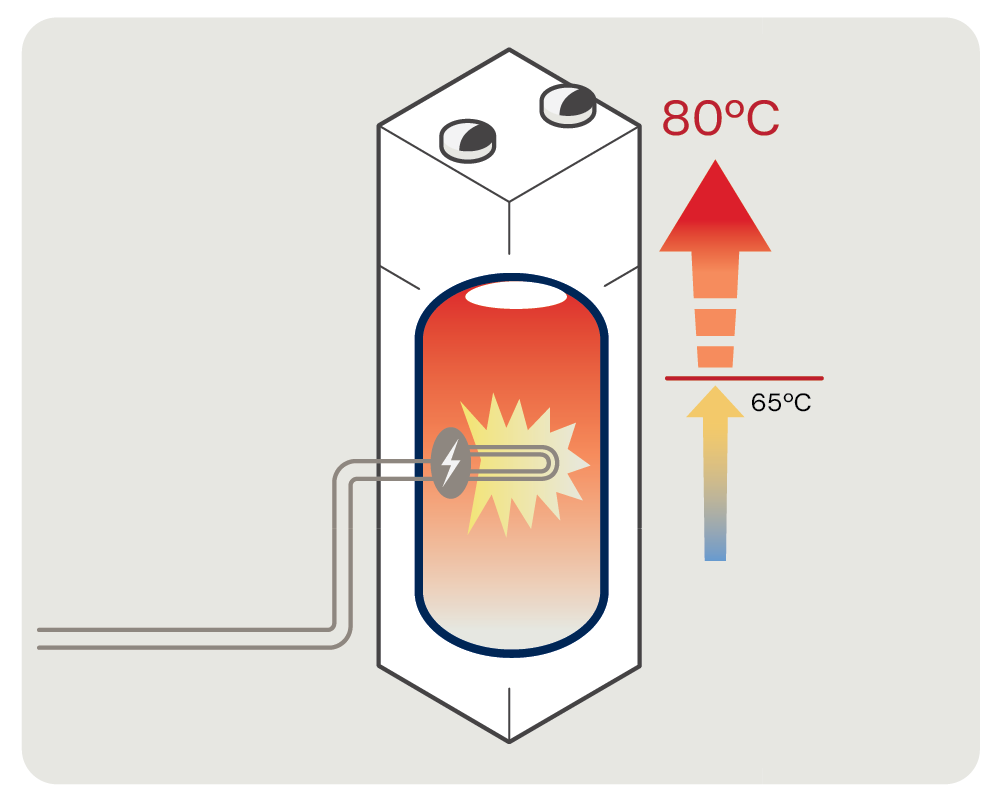
A thermal battery stores energy in the form of heat so it can be used when required.
Rather than generating heat during periods of peak electricity demand, a heat pump can operate when renewable energy is plentiful or electricity prices are lower, storing thermal energy for later use. Qvantum’s integrated thermal store acts as a thermal battery and can be charged when grid demand is low, helping to shift heating loads away from peak periods.
“In simple terms, thermal storage allows buildings to use energy at the best possible time rather than only when heat is immediately required.”
How does a Thermal Battery Work?
A thermal battery stores heat rather than electricity. Instead of generating heat only when it is needed, a heat pump can produce heat when electricity demand is lower or renewable energy is more readily available, storing that energy in an insulated thermal store for later use. When heating or hot water is required, the stored heat is released without the heat pump needing to operate immediately. This allows the system to make better use of available electricity while reducing demand during peak periods.
Unlike a conventional electrical battery, which stores electricity, a thermal battery stores heat energy. This makes it a practical and cost-effective way to improve the flexibility of a heating system while supporting the wider electricity network.
Thermal Battery vs a Standard Heat Pump
Both standard heat pumps and heat pumps with integrated thermal storage provide low-carbon heating, but they operate differently.
A standard heat pump typically produces heat as demand arises. During periods of high electricity demand, this can place additional pressure on the grid and may result in higher running costs where time-of-use tariffs apply.
A heat pump with an integrated thermal battery can generate and store heat in advance, making use of periods when renewable electricity is more abundant or electricity prices are lower. The stored heat can then be used later when it is needed, helping to reduce peak electricity demand and improve overall system flexibility.
For consultants and specifiers, this approach offers an opportunity to design buildings that are not only energy efficient but also better prepared for the UK’s evolving energy system.
Why This Matters for UK Specifiers
For consultants designing new-build residential developments, apartment schemes and retrofit projects, energy flexibility is becoming a critical part of future-proofed specification.
Key considerations include:
- Grid capacity constraints.
- Future Homes Standard requirements.
- Resident energy costs.
- Net-zero targets.
- Integration with renewable energy generation.
Buildings that can shift energy demand away from peak periods will be better positioned to meet both environmental and operational objectives.
“The projects that will perform best over the next decade are likely to be those that combine low-carbon heating with intelligent energy management.”
The Qvantum Difference
At Qvantum, thermal storage is not an afterthought, it is at the heart of the system design.
Our integrated thermal battery technology stores heat energy and enables the heat pump to respond intelligently to electricity pricing, grid conditions and renewable energy availability. Qvantum systems are also designed with FlexReady® functionality and API connectivity, allowing them to optimise operation based on energy market signals and renewable energy availability.
This allows building owners and occupants to benefit from:
- Reduced peak electricity consumption.
- Improved utilisation of renewable energy.
- Lower running costs through time-of-use tariffs.
- Greater resilience against future energy market changes.
- Improved long-term sustainability performance.
“We believe heating systems should do more than generate heat. They should actively contribute to a smarter and more resilient energy system.”
Qvantum has designed thermal storage as an integral part of its heating systems rather than an additional feature. By combining an integrated thermal battery with intelligent controls, Qvantum systems are designed to respond to electricity pricing, renewable energy availability and changing grid conditions. FlexReady® functionality and API connectivity enable the system to adapt automatically, helping optimise when heat is generated and stored. This approach supports lower peak electricity demand, improved use of renewable energy and greater long-term flexibility for residential developments.
As the UK’s energy system continues to evolve, integrated technologies like these can help future-proof heating strategies while maintaining comfort for occupants.

“At Qvantum, we’re helping consultants specify heating systems that are not only low-carbon but also ready for the future. By combining heat pump technology with integrated thermal storage, we can help create buildings that support residents, developers and the wider electricity grid alike.”
– Dan Gentle, Consultant Account Manager, Qvantum UK
A Valuable Solution for Apartment Developments
Urban housing presents some of the most complex challenges facing today’s specifiers. Space restrictions, electrical infrastructure limitations and decarbonisation targets can make conventional heating strategies difficult to implement effectively.
Qvantum’s approach is particularly suited to apartment buildings and high-density residential schemes, where thermal battery technology can help reduce peak demand while improving overall system performance. The company’s compact solutions are also designed for ambient loop networks, shared energy systems and urban retrofit applications.
“As the sector focuses on decarbonising cities, we need solutions that consider the wider energy ecosystem, not just the individual dwelling.”
Where Thermal Battery Technology Works Best
Thermal battery technology can benefit a wide range of residential developments, particularly where energy efficiency, space and electrical infrastructure are important considerations. These include:
- Apartment developments
- Build-to-rent schemes
- Affordable housing projects
- Shared energy and ambient loop systems
- Urban regeneration developments
- Residential retrofit projects where suitable
By storing heat when conditions are most favourable, thermal battery technology can help improve overall system performance while supporting the long-term sustainability of these developments.

Looking Beyond COP (Coefficient of Performance)
Heat pump specification has traditionally focused on efficiency metrics such as COP and SCOP (Seasonal Coefficient of Performance). While these remain important, they do not tell the full story. Future-ready heating systems must also be assessed against their ability to:
- Support grid flexibility.
- Integrate renewable energy.
- Reduce peak demand.
- Deliver long-term operational value.
- Adapt to emerging energy markets.
For consultants and specifiers, these factors are becoming increasingly important when evaluating heating technologies for residential developments.
The Future of Heat Pump Specification
As the UK’s energy transition accelerates, buildings will play an increasingly active role in balancing the electricity network. Thermal battery technology offers a practical way to achieve this while maintaining occupant comfort and reducing operational costs.
“At Qvantum, we’re helping consultants specify heating systems that are not only low-carbon but also ready for the future. By combining heat pump technology with integrated thermal storage, we can help create buildings that support residents, developers and the wider electricity grid alike.”
For specifiers looking to future-proof projects, improve energy flexibility and support net-zero ambitions, the thermal battery advantage is becoming impossible to ignore.
Frequently Asked Questions
A thermal battery stores heat energy so it can be used later, allowing a heat pump to operate when electricity demand is lower or renewable energy is more readily available.
No. A thermal battery stores heat rather than electricity. It works alongside a heat pump to improve when energy is used, rather than storing electrical power like a conventional battery.
Potentially, yes. By storing heat during periods of lower electricity prices, thermal batteries may help reduce running costs where time-of-use tariffs are available.
Who benefits most from thermal battery technology?
Thermal battery technology is particularly well suited to apartment developments, high-density residential schemes, affordable housing and other projects where energy flexibility and efficient use of space are priorities.
